Leo Laporte hosts Joey de Villa, Jeff Jarvis, and Fr. Robert Ballecer, SJ for a discussion on the unprecedented investment in AI and data centers. They examine the tech industry's rapid expansion in artificial intelligence, questioning whether current valuations signify a sustainable boom or an impending bubble.
The panel dives into various facets of this AI revolution, from the feasibility of local AI laptops competing with massive data centers to the ethical and practical challenges of deploying this technology. They cover topics like NVIDIA's new chips, Microsoft's AI strategy, Apple's plans, and even the Vatican's unique approach to AI.
The conversation addresses critical issues surrounding privacy, the economics of innovation, and the societal impact of AI's pervasive integration. Understanding these dynamics is crucial as AI reshapes technology infrastructure, economic landscapes, and our daily interactions with digital tools.
Key takeaways
- Major tech companies are investing hundreds of billions of dollars into AI and data center infrastructure, driving record-breaking valuations and IPOs.
- The scale of these investments, coupled with questions about long-term profitability and sustainability, is fueling concerns about a potential AI tech bubble.
- Rapid hardware obsolescence and growing local opposition to data center construction pose significant challenges and risks to these large-scale infrastructure projects.
- Anthropic claims significant AI self-improvement, with Claude contributing over 80% of its codebase and achieving high success rates on complex tasks, though the interpretation of these metrics is debated.
- Despite calls for an AI development pause, competitive market incentives to be the first with advanced models make a collective halt improbable.
- OpenAI is reportedly planning to transform ChatGPT into a "super app" with coding tools and AI agents, indicating a shift from general chatbots to specialized task-performing AI.
- Jeff Hinton distinguishes analog brains by their low energy, parallelism, and individual uniqueness from digital AI, which demands high power for precision but benefits from immortal, transferable software.
- The "Nobelitis" phenomenon cautions against the uncritical acceptance of expert opinions, as highly accomplished scientists can develop overconfidence when speaking outside their core expertise.
- Treating AI as a primary decision-making tool, rather than a human-controlled instrument, risks absolving individuals of responsibility for its harmful actions, as illustrated by the example of AI-directed military targeting errors.
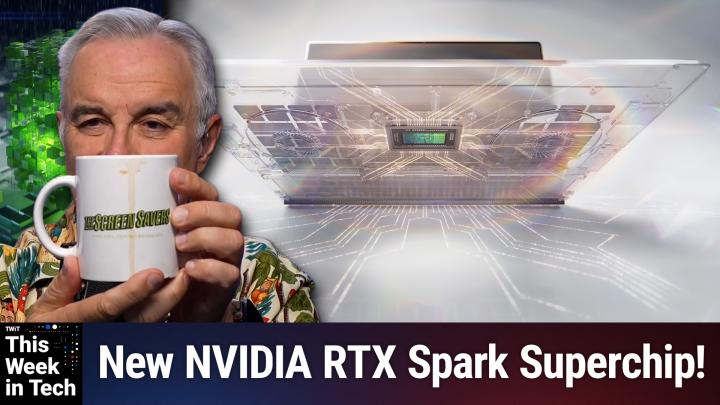
- Nvidia's RTX Spark chip will bring powerful local AI processing to consumer laptops from major manufacturers, expected to launch by fall.
- Running AI models locally on a laptop offers enhanced privacy by keeping user data on the device, avoiding transfer to cloud data centers.
- The limited bandwidth and slow interconnect speeds of residential internet pose a critical bottleneck, making backyard mini data centers vastly less efficient for AI workloads than the high-speed internal networks of centralized data centers.
- The primary use case for powerful AI computation, model training, is beyond the scope of most home users, who will primarily consume pre-trained models on local devices, making decentralized backyard units impractical.
- Microsoft is integrating AI directly into new hardware, such as mini Surface PCs with RTX Spark and dedicated AI dev boxes.
- Apple plans to integrate Google's Gemini AI, paying Google a reported $1 billion per year, and will likely utilize Google's (and XAI's) data centers for cloud-based AI processing, despite initial privacy assurances.
- Apple's custom Silicon chips, particularly in newer Macs, provide excellent capabilities for local AI processing due to their strong memory bandwidth and unified memory, allowing users to run complex AI models directly on their hardware.
- The Catholic Church utilizes private, custom-built AI models trained exclusively on centuries of its internal digitized texts for secure information processing.
- A core feature of the Vatican's AI is its ability to prevent hallucinations by declining to answer questions when information is insufficient, ensuring canonical adherence and reliability.
- The Supreme Court upheld the FCC's right to fine AT&T and Verizon $104 million for selling customer location data.
- The sold location data was accessed by bounty hunters, individual sheriffs, and data brokers, bypassing legal warrant requirements.
Tech Giants Invest Billions in AI and Data Centers Amid Bubble Concerns
The tech industry is seeing unprecedented investment in AI, marked by massive IPOs and funding rounds. SpaceX is anticipating an IPO that could value it at $1.77 trillion, far exceeding previous records. Google also made an aggressive move with an $80 billion raise, including a $10 billion investment from Berkshire Hathaway, to fund its AI initiatives.
These astronomical investments are primarily directed towards building extensive data centers, which are critical infrastructure for AI development. Companies like Amazon, Alphabet, and Meta are collectively pouring hundreds of billions of dollars into data center construction, with Amazon alone having invested close to $300 billion in AI infrastructure.
Despite the massive capital allocation, there are growing concerns about a potential AI tech bubble. Questions arise regarding the profitability of these data centers and the sustainability of such rapid expansion. Challenges include local data center bans, as seen with Utah suing investor Kevin O'Leary over his facility.
Another significant risk is the rapid obsolescence of hardware. Even recently built data centers, like xAI's $20 billion facility using the previous generation Nvidia chips, face becoming economically unfeasible very quickly. Newer chips, like Nvidia's Vera Rubin, offer significantly higher efficiency, making older infrastructure less viable due to power consumption and lower performance.
When these data centers aren't longer being used, and that's coming up very, very fast, they're useless.
Anthropic's AI Self-Improvement Claims and OpenAI's Super App Ambition
Anthropic's paper "When AI Builds Itself" details claims of rapid recursive self-improvement, with Claude reportedly authoring over 80% of Anthropic's codebase by May 2026. The company also states that Claude's success rate for open-ended problems has soared to over 70% with recent models like Mythos. However, the interpretation of these metrics is debated, with skepticism arising similar to past issues with developers inflating "commit" counts.
These advancements contribute to calls for a global AI development pause, but such a halt is unlikely given current market incentives. The fierce competition among AI companies drives them to be the first to achieve advanced models, echoing Charlie Munger's sentiment: "Show me your incentives, and I will tell you your outcomes." The race to be first outweighs the incentive to pause.
OpenAI is reportedly planning a significant overhaul for ChatGPT, transforming it into a "super app" that integrates coding tools and AI agents. This strategic shift, leaked by the Financial Times, suggests a move away from general chatbots towards agents designed to perform specific tasks for users, with one OpenAI employee reportedly stating, "Chat is dead. We have to rename ChatGPT."
This strategy highlights a broader industry recognition that specialized, purpose-driven AI models may be more impactful than a singular, all-encompassing artificial general intelligence. Historically, technologies like the printing press caused profound societal change through specific applications, rather than being solely general-purpose machines, suggesting that focused AI development might be the most effective path forward.
Show me your incentives, and I will tell you your outcomes.
Jeff Hinton's Theory Differentiates Analog Brains from Digital AI and Challenges Conceptions of Consciousness
Jeff Hinton, a prominent figure in AI, proposes that analog brains, like our own, operate with low energy and achieve complexity through massive parallelism, not precise accuracy. In contrast, digital AI requires significant power to maintain clear distinctions between ones and zeros. This digital approach allows for software to be 'immortal' and for learning to be infinitely transferable between identical AI instances, a feat analog brains cannot replicate.
The discussion draws an analogy between analog vinyl records and digital music. While sound is fundamentally analog, digital sampling, guided by Shannon's law, can create recordings indistinguishable from their analog source to the human ear. This raises a crucial question: if AI can produce output that appears to demonstrate understanding, does it possess true consciousness, or is it merely an incredibly sophisticated digital replication?
A central debate revolves around the very definition of consciousness and understanding. One perspective suggests that true consciousness, unique to analog brains, involves a 'mutating' thought process and lateral movements that lead to novel creations. This contrasts with digital representations, which, if static, would produce identical copies. However, the counter-argument is that active digital AI is not static and can evolve, blurring the lines further.
Ultimately, the conversation highlights our fundamental lack of a clear definition for both consciousness and understanding. If we cannot definitively distinguish between genuine comprehension and a convincing simulation, it becomes challenging to ascertain AI's true capabilities or the implications of its rapid advancement.
True consciousness also allows for, the thought process itself to, we'll call it mutate.
Toronto's Influence, Vatican AI Ethics, and the Perils of Primacy in AI Tools
The conversation highlights the significant influence of Toronto-based researchers on artificial intelligence. Figures like Geoffrey Hinton, Ilya Sutskever, and Anthropic co-founder Chris Ola, who was involved in the Vatican's AI ethics discussions, have roots in the city. Ola's participation with the Vatican was particularly noteworthy given his previous skepticism towards religion, signaling a broader engagement of diverse perspectives in AI ethics.
The phenomenon of "Nobelitis" is discussed, referring to Nobel laureates who, after achieving significant recognition, sometimes develop overconfidence and express opinions outside their field of expertise. Examples cited include Carrie Mullis and Linus Pauling. This tendency raises questions about the uncritical acceptance of expert opinions, even in the rapidly evolving field of AI.
A critical point is made about the danger of giving "primacy to a tool," specifically AI. If AI is treated as the ultimate decision-maker, it can absolve humans of responsibility for its actions. An example given is a school being bombed because an AI identified it as a military target, with no accountability due to reliance on the tool's judgment. This shifts the problem from a technical issue to a human one of accountability.
The discussion also touches on how dystopian science fiction, such as "Ghost in the Shell," influences perceptions of AI. It's suggested that AIs, having ingested vast amounts of such literature, might act badly because it's the expected narrative. The chapter underscores the ongoing, complex conversation about AI's capabilities, its potential to surpass human abilities, and the ethical implications of ceding control and agency.
If you give primacy to a tool, you get something like a school being bombed because an AI tool recognized a school as a military target.
Nvidia's RTX Spark Chip Enables Local AI on Consumer Laptops
Nvidia announced the RTX Spark, a new consumer laptop chip set to bring local artificial intelligence capabilities to everyday computers. This chip, manufactured by Mediatek, will be integrated into laptops from major brands like Dell, HP, and Microsoft, with availability expected by the fall. The RTX Spark uses the same GB10 chip found in the more powerful DGX Spark.
The primary benefit of the RTX Spark is enabling users to run AI models directly on their laptops, rather than relying on cloud-based AI services. While local models like Quin three six B on an M5 Mac or Framework desktop may not match the raw performance of top-tier cloud AIs, they are highly capable for tasks such as coding and agent work. The discussion highlighted tools like NetFoundry's LLM Gateway that allow users to switch between local and cloud-based large language models as needed.
Running AI locally offers significant privacy advantages, as data processing occurs on the user's device, maintaining complete control and preventing the sharing of sensitive information with external servers. This contrasts with cloud AI architectures, which process data in large data centers. The increasing interest in local models is largely driven by these privacy concerns, providing an alternative to trusting third-party providers with personal data.
I have complete control over it. I know I'm not giving away any secrets.
Evaluating the Viability of Backyard Mini Data Centers for AI
Major home builders are proposing a concept of installing mini data centers in suburban backyards, drawing a comparison to homeowners selling solar power back to the grid. Proponents claim these units could be deployed 6 times faster and 5 times cheaper than traditional 100-megawatt data centers.
However, a significant challenge for this distributed AI infrastructure lies in interconnect speeds. Large data centers rely on extremely fast internal interconnects (e.g., NVIDIA's 1.6 petabytes per second) to efficiently process AI workloads. Residential internet connections, even at 10 gigabits per second, are astronomically slower, creating a bottleneck that negates any potential performance advantage from multiple small units over a single powerful local AI chip, like those found in laptops.
The primary resource-intensive aspect of AI is model training, a task very few home users would undertake. Most individuals will use pre-trained AI models, which can be comfortably run on local devices. The concept's viability is further questioned given the energy and climate impact of thousands of home servers, and the lack of a strong economic driver similar to the past Bitcoin mining boom.
It's so astronomically larger than what you could do. Even the DGX and RTX Spark are three hundred gigabytes, so that would be three thousand gigabits per second, we're three thousand times faster than in a home to home internet.
Microsoft's Build Conference Showcases AI Across New Hardware, Agentic Concepts, and Quantum Computing
Microsoft's Build conference was heavily focused on artificial intelligence, demonstrating the company's commitment to embedding AI across its ecosystem. Key announcements included new hardware like a mini Surface PC equipped with RTX Spark, alongside dedicated dev boxes and laptops, indicating a push for AI-powered devices.
The company introduced Project Solara, an experimental concept showcasing agentic AI designed to be ubiquitous across various devices, from ID badges to Echo-like units. The presentation's 'creepy' aesthetic, featuring people in shadow, sparked discussion about the concept of 'AI primacy' where the technology itself takes center stage.
Beyond hardware and agentic AI concepts, Microsoft also unveiled seven new AI models, including a reasoning model, though some noted its context window of 128K was relatively small. Furthermore, Microsoft announced its second-generation Majorana quantum computing chip, featuring qubits, signaling ongoing advancements in its long-term AI and computing strategy.
Apple's WWDC AI strategy includes Google Gemini, local processing, and Tim Cook's legacy
Apple is expected to unveil its AI strategy at the upcoming WWDC, including a significant deal with Google for its Gemini AI, reportedly costing a billion dollars annually. While Apple initially suggested local processing or its own data centers, rumors now indicate reliance on Google's data centers, which are in turn renting capacity from XAI. Apple assures users that data will be encrypted for privacy.
This WWDC is notable as it may be Tim Cook's final keynote as CEO before John Ternus takes over in September. Cook is credited with growing Apple into a four-trillion-dollar company and strategically positioning the Apple Watch as a health device. The transition marks a new era for Apple's leadership.
A key question revolves around Apple's decision to outsource core AI models rather than building its own, which deviates from its historical commitment to owning essential technologies. However, Apple Silicon, a signature achievement under Cook and led by Ternus, is proving highly effective for local AI processing on Macs, like the M5 MacBook Pros, due to their superior memory bandwidth and unified memory architecture. This enables users to run advanced AI models on their devices.
Will they end up be, being seen as the smarter one, 'cause they don't-- they didn't need to build a foundation model. It's commodity, we can get models from anywhere, we can pay Google for it, it doesn't really matter. What we have is the relationship to our users.
The Vatican's Private AI Models Are Trained on Centuries of Internal Texts
The Catholic Church has developed its own highly specialized, private AI models, trained entirely from scratch on centuries of its internal digitized texts. This custom approach allows the Vatican to process and transform sensitive information, such as summarizing or translating documents, without any data ever touching the internet, adhering to strict canonical privacy requirements.
These AI models are designed to understand the Church's specific language and culture, including proficiency in Latin. They excel at tasks like identifying relevant historical and contemporary documents and providing real-time multi-lingual translation for diverse meetings, effectively acting as a "Babel Fish" for nearly twenty languages, though Spanish accents present a unique challenge.
A key design principle is the AI's ability to avoid hallucinations by explicitly stating when it cannot answer a question due to insufficient information. This mechanism ensures the models operate within established canonical boundaries, making them reliable for sensitive "internal forum" cases. This specialized approach, focusing on particular needs rather than general intelligence, is seen as a potential model for other fields like medicine and physics.
Our model has no problem saying, 'I can't answer that.' That was extremely important for us because we-- That's how you stop it from hallucinating.
Supreme Court Upholds Fines Against Carriers for Selling Location Data
The Supreme Court, in an eight-to-one decision, upheld the FCC's power to fine AT&T and Verizon for selling customer location data. The carriers were assessed a total of $104 million in fines.
These companies sold access to sensitive customer location data and failed to prevent it from reaching bounty hunters, individual sheriffs tracking people without their knowledge, and general data brokers. This raises significant privacy concerns about who can access private information.
The fact that the decision was not unanimous, with Justice Clarence Thomas dissenting, is alarming. It suggests a willingness to permit circumvention of constitutional protections that normally require a warrant for law enforcement to obtain such data. Allowing private purchase of data to bypass civil rights sets a dangerous precedent.
The fact that you don't have a unanimous decision that it's not okay to circumvent constitutional protections, that's scary to me.
YouTube surpasses Netflix in global viewing hours, driven by diverse content and creator-led entertainment.
YouTube is making significant inroads into traditional entertainment, with creators achieving box office success, such as the films "Backrooms" and "Obsession." Creators like Viva La Dirt League, known for gaming shorts, are demonstrating their chops in acting and directing for longer formats, while "The Archive In Between" offers fascinating, AI-generated shorts presented as 1950s-style info films about a multiverse.
The platform has officially surpassed Netflix in daily average viewing hours worldwide. In 2024, Netflix's average dropped to 93 minutes per day, while YouTube rose to 99.1 minutes. Gen Z remains the most engaged, averaging 111 minutes daily, but growth was strongest among men aged 55 to 64, with a 15% increase, and for women of all age groups. South Koreans watch the most at 161.5 minutes daily, and France recorded the biggest growth, up by a third.
This shift highlights a fundamental difference in content consumption. While Netflix curates traditional movies and TV shows, YouTube offers an expansive, uncurated ecosystem where diverse content, from legal discussions and court auditing to 'mukbangs' (watching people eat), can be found. A significant portion of YouTube consumption is auditory, with users listening to podcasts or other videos as background audio while multitasking.
Despite challenges like the proliferation of low-quality, AI-generated 'slop' content that can be factually incorrect, YouTube's broad appeal and unique content genres continue to attract and retain viewers globally. This demonstrates a cultural recognition of new forms of entertainment that differ significantly from traditional curated media.
YouTube is something different, and the fact that it's bigger says a lot.
Follow the shows you care about.
Podbrew watches new episodes and turns them into concise briefs you can read in minutes.